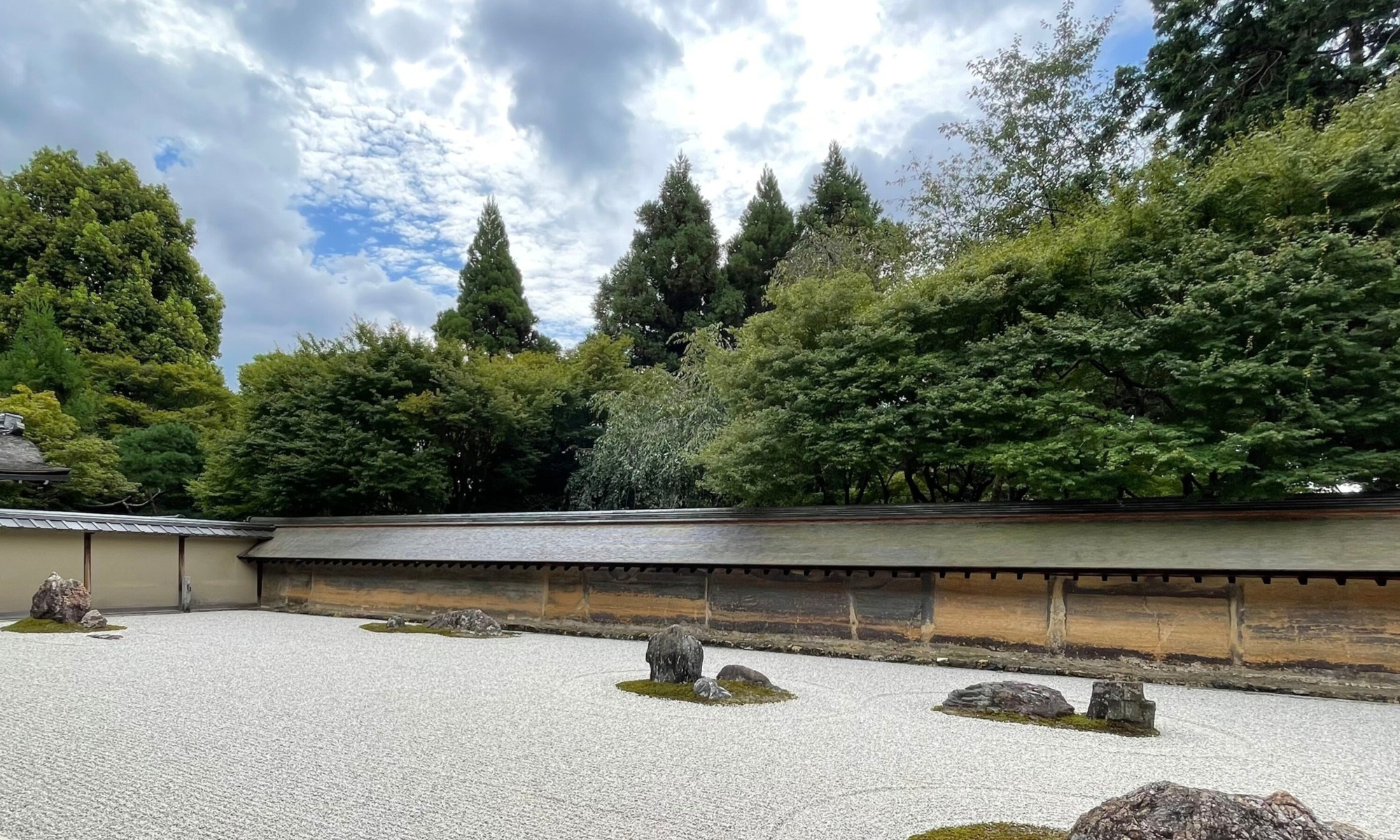

Landskiphilia is an academic paper by Christopher S. H. Long that proposes a new conceptual framework for understanding humans’ innate affective preferences for specific landscape qualities—responsible for the healing effects of landscape, especially for our mental wellbeing. Its central claim is that certain ways of perceiving and responding to landscape are not merely cultural, aesthetic, or learned, but deeply rooted in evolutionary processes.
Core Argument
The paper builds from Gibson’s theory of affordances to argue that landscapes are perceived in terms of what they make possible: movement, shelter, orientation, hunting, escape, settlement, memory, and meaning. It extends this into a definition of space as something sensed in relation to what it affords a being at a given moment — whether perceived visually, bodily, or through memory.
From this standpoint, landscape is not treated as scenery but as a survival medium. Forms, surfaces, voids, edges, textures, and compositions become meaningful because they enable or constrain action. Over long evolutionary timescales, humans developed affective preferences for particular landscape characteristics because those characteristics helped our ancestors survive, navigate, remember, and thrive.
Relationship to existing theories
Landskiphilia sits within a lineage of biological and environmental theories of landscape aesthetics:
- Savannah Hypothesis: the idea that humans retain a preference for open, tree-studded landscapes with views and resources because such environments supported early hominin survival.
- Information Processing Theory: landscape preference depends partly on coherence, legibility, complexity, and mystery.
- Prospect-Refuge Theory: humans prefer spaces that allow both surveillance and concealment.
- Jellicoe’s evolutionary “transparencies”: different layers of landscape response correspond to evolutionary stages such as rock/water, forester, hunter, settler, and voyager.
- Biophilia: Wilson’s notion that humans possess an innate tendency to focus on life and lifelike processes.
This understanding of biophilia, as opposed to the too narrowly reduced and simplistic interpretation “love of nature”, to include fear, vigilance, reverence, and survival-oriented attention toward nature is critical. Landskiphilia is proposed as a subset or extension of biophilia focused specifically on humans’ innate responses to landscape form, spatial structure, and environmental patterns.
Key Findings
Across six arguments, Landskiphilia integrates evidence from neuroscience, evolutionary biology, environmental psychology, landscape theory, and cultural history to demonstrate how humans instinctively perceive, evaluate, and emotionally respond to spatial and landscape patterns. Understanding these innate responses provides new foundations for evidence‑based landscape design and contributes to contemporary efforts to build liveable, resilient, regenerative cities.
1. Space as affordance.
Humans sense space as the possibility for beings or objects to occupy locations relative to themselves. This aligns with evolutionary survival needs and is supported by discoveries of place and grid cells in our brains, which enable internal mapping of the environment.
2. Forms and landscape elements define perceivable space.
Objects—trees, poles, landforms—serve as reference points that shape spatial perception. Examples from Francis D. K. Ching’s “vertical linear element” and perspective drawing techniques show how even minimal figures can imply spatial depth and relationships. These examples support the claim that forms define space not by enclosing it physically, but by shaping how observers understand where bodies, objects, and actions may occur.
The neuroscience of place and grid cells reinforces this point: spatial perception, navigation, memory, and relative positioning appear to be biologically embedded. The paper notes that since humans and rats (studied in the experiments) diverged around 90 million years ago, such spatial mapping mechanisms may be evolutionarily ancient, possibly shared across mammals.
3. Humans can rapidly detect critical environmental information.
Through instinctive scanning mechanisms, inherited from tree‑dwelling primates and other ancestors, humans can instantly extract useful structural information (e.g., safe paths, threats, resources) from complex landscape textures.
4. Two landscape pattern types shape perception: extracted and abstracted patterns.
Extracted patterns support immediate survival behaviours (e.g., movement, foraging), relying on short‑term memory.
Abstracted patterns form long‑term and cross‑generational landscape compositions (e.g., mountains, savannah forms), enabling cultural transmission, learning, and emotional attachment.
5. Landscape compositions and collective memory
Landskiphilia’s larger evolutionary hypothesis is that some abstracted landscape compositions became embedded in collective memory because they repeatedly supported survival across generations. These compositions include landscape conditions useful for settlement, defence, agriculture, hunting, refuge, prospect, orientation, and social learning. They shape:
* spatial memory,
* psychological well‑being,
* affective responses (e.g., preference for prospect‑refuge conditions),
* and even conceptual thinking, as spatial cognition and conceptual learning share common brain systems.
6. Landskiphilia enriches biophilic and regenerative design theories.
Current biophilic design emphasises positive affiliation with nature but often neglects the full range of innate responses. Landskiphilia broadens this by incorporating:
* survival instincts,
* shared species‑wide spatial behaviours,
* and biologically rooted preferences for landscape compositions.
This expanded understanding is critical for regenerative design, which aims to rebuild ecosystems, but must also re‑embed human psychological needs within the environment.
Implications for Practice and Research
A landskiphilic framework offers an expanded basis for evidence‑based landscape design. It suggests that:
* landscape architects should reconsider traditional design principles through an evolutionary‑neuroscientific lens;
* identifying additional Landscape Ur‑patterns may help in the design of more psychologically resilient urban environments;
* interdisciplinary research between landscape architecture, neuroscience, psychology, and environmental planning is essential.
These insights can guide the creation of urban spaces that align with deep‑rooted human spatial instincts, improving mental health and strengthening cities’ regenerative capacity.
Conclusion
Landskiphilia revisits and broadens the spectrum of the human–landscape relationship as a biologically grounded, evolutionarily shaped system of innate spatial and aesthetic preferences. It brings together past biological theories into a unified conceptual framework while suggesting the potential for new understandings. By reconnecting landscape design with evolutionary psychology and neuroscience, the paper opens the pathways for the integration of landscape psychology into regenerative design, reinforcing our human needs within our ecological goals, regenerating the nature both around us and within us.