Edward O. Wilson defined biophilia not merely as “the urge to affiliate with other forms of life,” but more broadly as “the innate tendency to focus on life and lifelike processes”. When we think of this concept, our minds often drift to intimate, comforting encounters. Interacting with a pet or observing an animal up close can trigger an instant wave of warmth and well-being. That “warm fuzzy feeling” is real, valid, and a fundamental part of why we love having animals in our lives.
However, our psychological and behavioral connection to creatures goes much deeper than individual, cuddly engagements. When we step back and observe animals and their behaviors acting within nature, those dynamics take on a profound meaning that is deeply rooted in our evolutionary history.
Signals of the Wild: From Imminent Danger to Serene Harmony
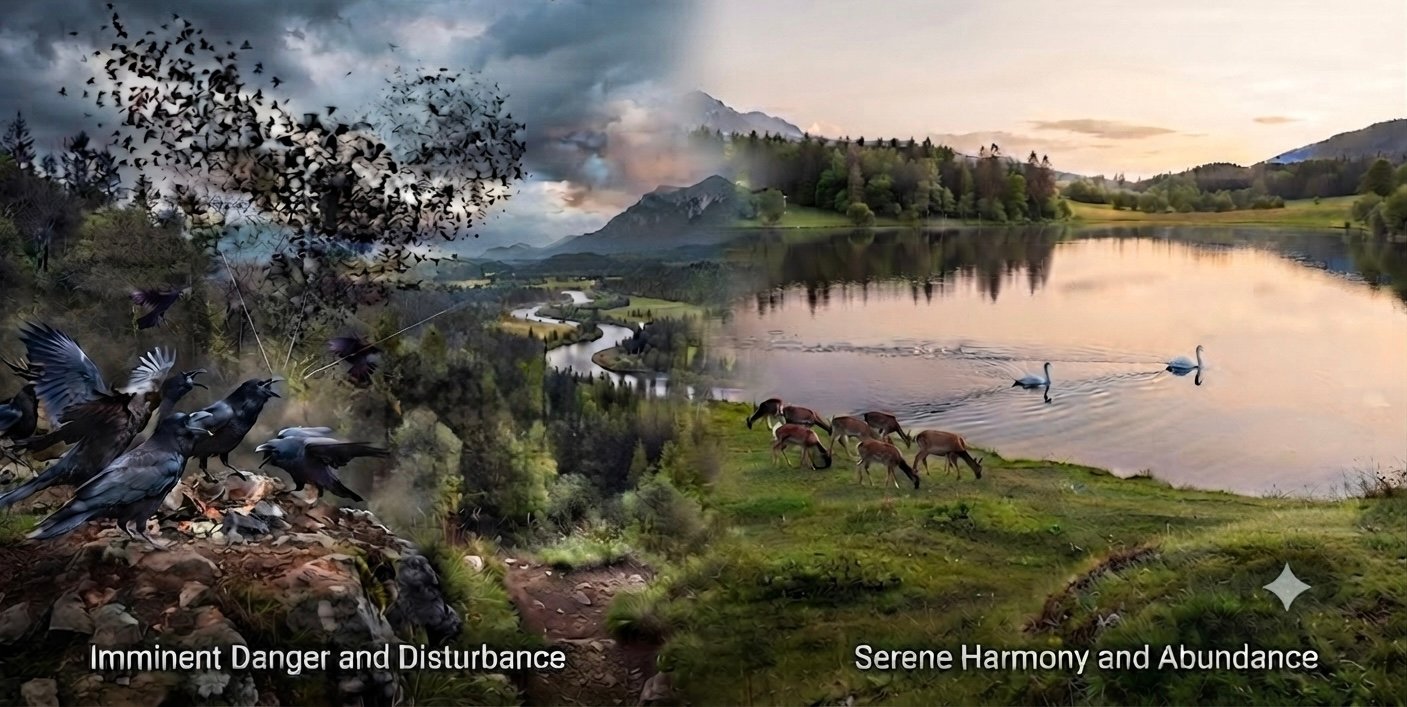
Consider how deeply attuned we are to animal behavior in popular culture and everyday life. When we see a sudden, chaotic flock of birds scattering into the air, or hear the loud caws of crows gathering around a site of mortality—historically viewed in folklore as a harbinger of nearby loss—our instincts immediately spike. We don’t just see or hear birds moving; we recognize an environmental signal.
Why do these patterns command our attention so instantly? Across millennia of human evolution, paying attention to sudden disruptions or gatherings in animal behavior meant reading vital clues about the environment. Crows converging and calling loudly around carrion serve as a clear signal of a carcass or sudden death in the vicinity—acting as a natural indicator of food sources, scavenging activity, and possibly hazards nearby. Our sensitivity to these living cues is an evolutionary early-warning and resource-tracking system hardwired into our collective psychology.
Conversely, animal behaviors can just as easily evoke a completely different emotional register. Watching waterbirds glide effortlessly across a calm lake, or observing herds grazing peacefully, evokes a sense of a serene, harmonious, and idyllic setting. These behavioral rhythms signal safety, resource abundance, and ecological stability, inviting our minds to rest and decompress.
A Sensitivity to Behavior and Form
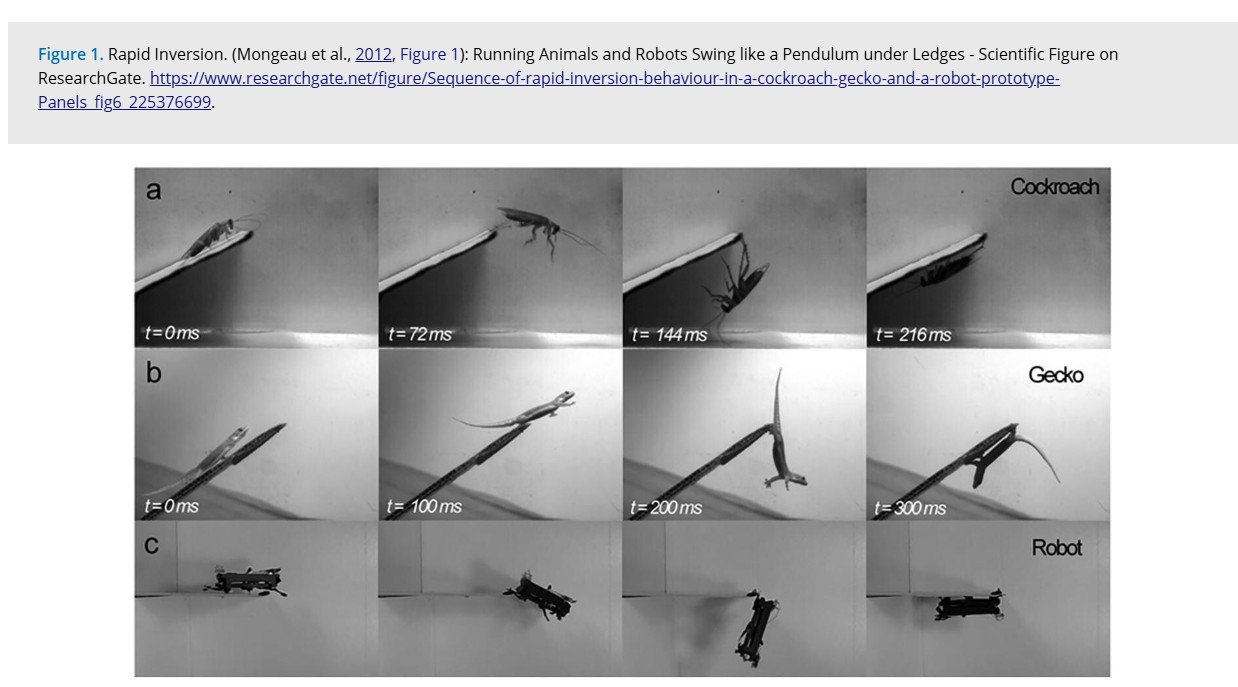
Following the principles of environmental psychology and evolutionary design, our sensitivity extends far beyond the physical presence of a creature. We are inherently tuned to how creatures behave and move within their environments.
In the same way that early humans tracked the affordances of the landscape—such as recognizing where a tree branch could support a primate’s weight or where terrain offered a vantage point for a hunt—we read animal movements as dynamic spatial data. Animals are active participants in the landscape, and their movements trace invisible lines of tension, safety, and rhythm across our field of vision.
Conclusion: From Biophilia to Landskiphilia
Ultimately, biophilia is not merely about isolated contact with nature, such as touching an animal or visiting a green space per se. True connection to the living world encompasses animal “patterns in motion” and how these dynamic behaviors integrate with the physical environment.
When we observe how creatures navigate, signal, and dwell within their habitats, we are engaging with a deeper layer of environmental perception. This brings us directly into the realm of landskiphilia—our innate affective preference for the structural compositions, patterns, and living rhythms of the land that guided our ancestors’ survival and continue to anchor our psychological resilience today.