Landskiphilia—Our Emotional Connection with Landscape (a summary of “Landskiphilia—Our Affective Preferences for Landscape Patterns”

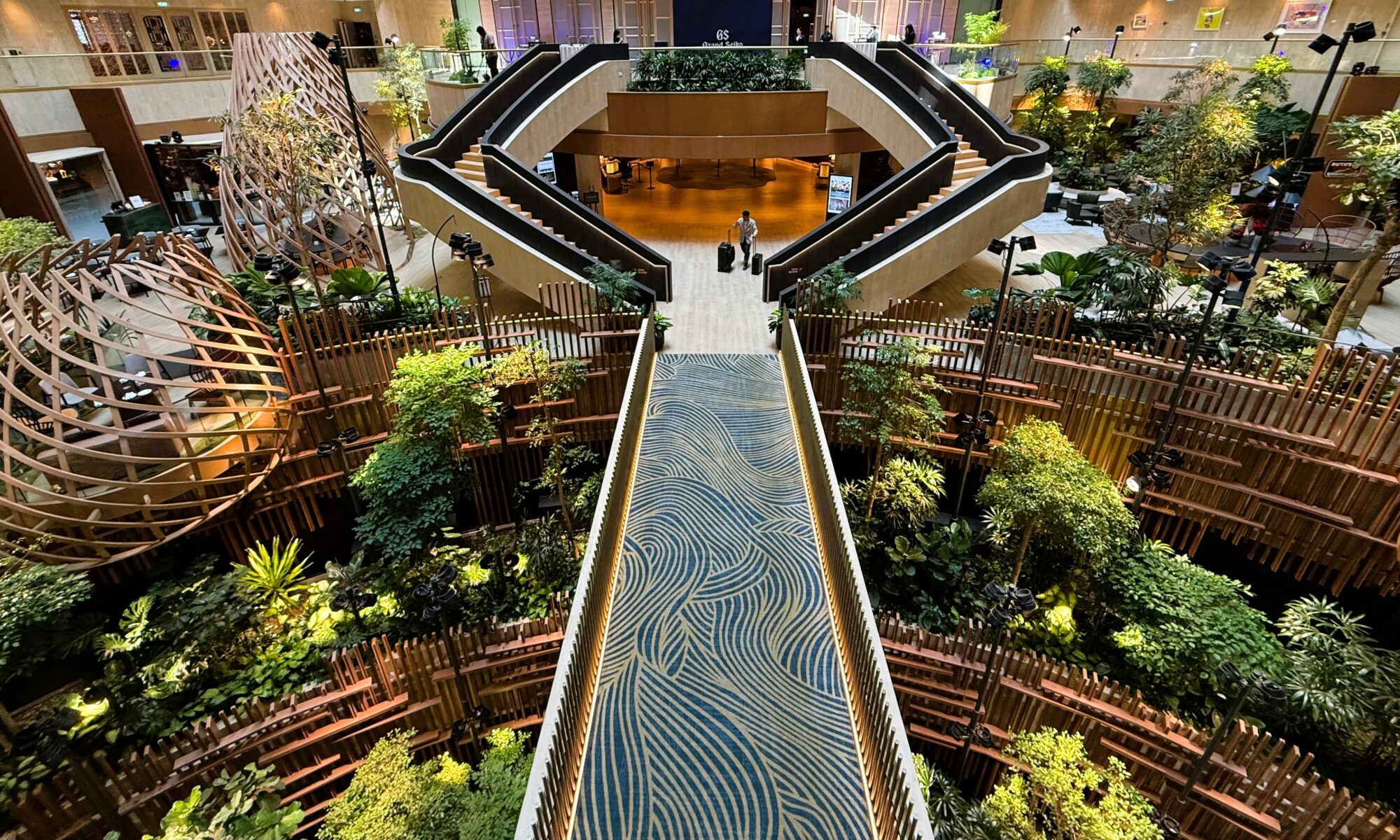
The Interior "Forest" Landscape of Park Royal Collection Marina Bay


“Landskiphilia—Our Affective Preferences for Landscape Patterns” proposes that humans possess innate, evolutionarily shaped emotional preferences for certain landscape forms, spatial structures, and environmental patterns. Building on Gibson’s theory of affordances, the paper argues that landscapes are not perceived merely as scenery, but as survival environments that suggest possibilities for movement, shelter, orientation, refuge, prospect, memory, and meaning.

The framework connects and extends existing theories such as the Savannah Hypothesis, Information Processing Theory, Prospect-Refuge Theory, Jellicoe’s evolutionary landscape layers, and Biophilia. It recovers biophilia’s meaning beyond a simple “love of nature” to include fear, vigilance, reverence, and survival-oriented attention toward natural environments.

Landskiphilia identifies how humans instinctively read spatial cues through forms, edges, textures, voids, and compositions. Neuroscience, including research on place and grid cells, supports the idea that spatial perception and environmental mapping are biologically embedded. It also distinguishes between extracted patterns, which support immediate survival behaviours, and abstracted patterns, which become embedded in long-term memory, culture, and collective landscape preference.

Landskiphilia suggests that some landscape compositions endure because they historically supported settlement, defence, agriculture, hunting, movement, and social learning. These patterns influence spatial memory, psychological wellbeing, affective response, and even conceptual thinking.

For practice, the framework offers a stronger foundation for evidence-based, regenerative landscape design. It encourages landscape architects to integrate evolutionary psychology, neuroscience, environmental psychology, and cultural memory into design thinking. Ultimately, Landskiphilia positions landscape as both ecological and psychological infrastructure—capable of regenerating the nature around us and the human instincts within us.

For a more detailed summary of the original paper and its relevance in regenerative design, please click here.
Landskiphilia is published—3 reasons why it is worth a read!

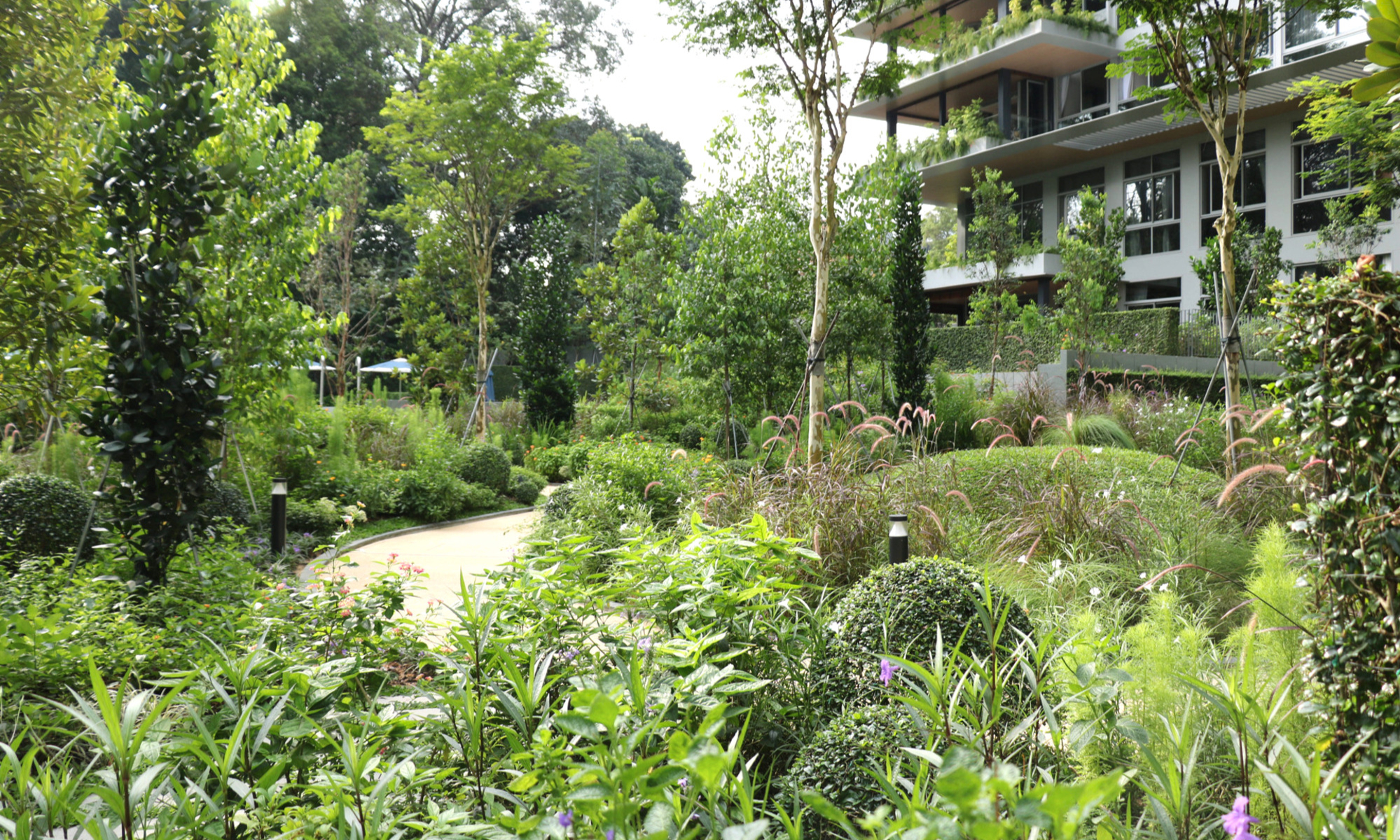
landskiphilic design expressed in a botanic anthropometry

I am pleased to announce the publication of the conceptual framework for landskiphilic design: “Landskiphilia — our affective preferences for landscape patterns” in the peer-reviewed journal Landscape Research.

Before we begin, a quick note of gratitude. This paper stands on the shoulders of giants. I owe a massive thank you to professors John Dixon Hunt, James Corner, and Anita Berrizbeitia. Their encouragement to pursue my interest planted the seeds for this work, and I am incredibly grateful for their enduring influence on my thinking. My initial idea for this paper was in Professor Hunt’s words “intriguing… but… does not prove anything;” and he exhorted me to “argue, don’t just assert!”

It has taken me over 26 years to heed his advice.

I am also immensely grateful for the patience of Dr Paul Brindley, who as academic editor, has invested so much not only to help me bring the work to a level ready for publishing, and also to help me polish it.

Below are three reasons why the paper is worth a read:

Reason One: It introduces a new conceptual framework for landscape theory

“Landskiphilia” is a novel, evolution-rooted explanation of why humans emotionally and neurologically respond to landscape. It looks at landscape theory from multiple perspectives; it is not merely a reinterpretation of existing work; and it gives readers a fresh and conceptually new framework.

Reason Two: It bridges neuroscience, evolutionary biology, and landscape architecture in a way few papers do

The paper offers a rare transdisciplinary synthesis integrating place/grid cells research, affordance theory, evolutionary behaviour, and cultural landscape. This makes it valuable to designers, planners, psychologists, and researchers seeking evidence-based foundations for spatial design.

Reason Three: It offers practical implications for building future liveable and regenerative cities

The paper doesn’t stay theoretical—it explains why understanding innate spatial preferences can strengthen urban design for mental health outcomes. It also explains how integrating biodiversity, climate mitigation, and other eco-system function goals with psychological goals can result in holistic regenerative design for both the nature around us and in us.

Please click here for the paper: https://doi.org/10.1080/01426397.2026.2682469
If you’d would prefer just a shorter read, please follow us, our next blog will present a summary of the paper.