“It isn’t just about what we build into our spaces, but how spaces instinctively build themselves into us.”

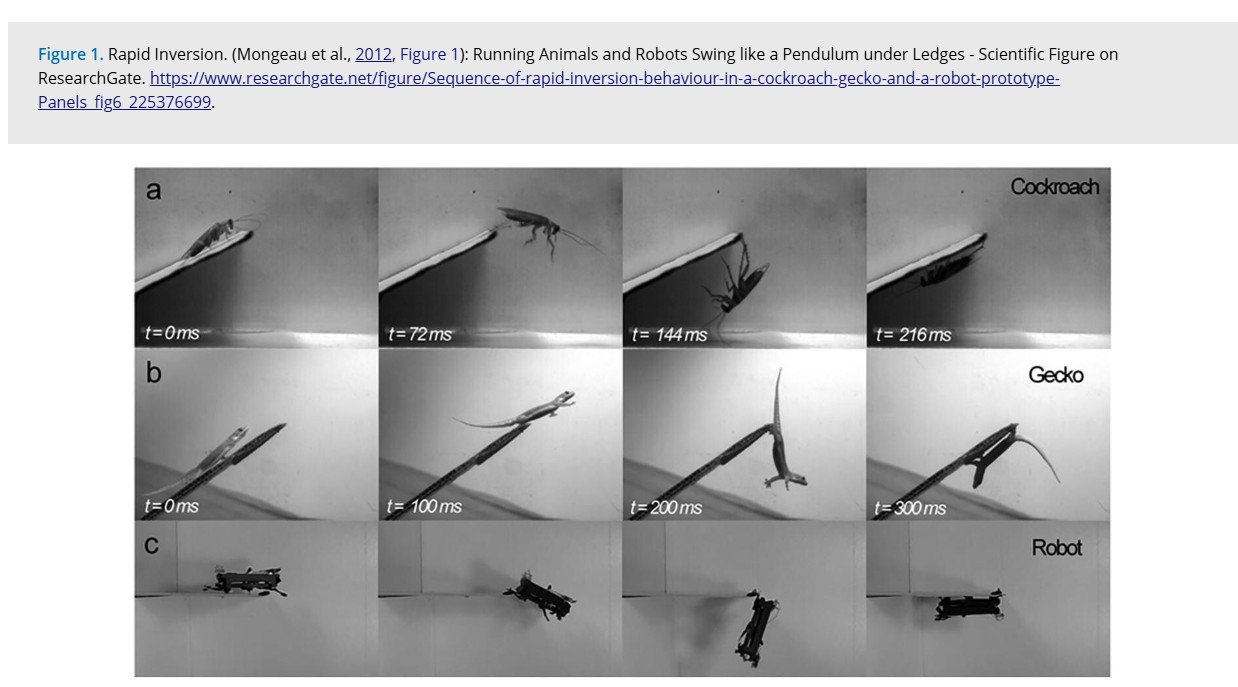
a gecko or a cockroach sprinting up an incline to escape a predator, hitting the edge of a ledge at full tilt, and diving off—only to swing underneath like a pendulum and vanish. It’s a breathtaking spatial maneuver known as Rapid Inversion, and an incredible piece of evolutionary copycatting where entirely unrelated species hit upon the exact same high-speed stunt to cheat death

Picture this: A gecko or a cockroach is sprinting frantically up an incline, escaping a hungry predator. They reach the edge of a ledge at full tilt—and instead of stopping or flying off blindly, they dive right over. But they don’t fall. In a fraction of a second, their feet latch onto the underside of the ledge like a grappling hook, swinging like a pendulum to vanish completely out of sight.

To their predators, it’s a baffling disappearing act. To evolutionary biologists and robotics engineers, this breathtaking spatial maneuver is known as Rapid Inversion. In fact, as shown in the research, scientists didn’t just observe this trick in nature—they used it as biological inspiration to program a tiny, hexapedal search-and-rescue robot (equipped with little Velcro “claws”) to successfully perform the exact same death-defying swing. It relies entirely on how these systems interact with the physical geometry of their environment.

Rooted in James J. Gibson’s theory of affordances, space is fundamentally defined not as a blank, neutral Cartesian grid, but as what the environment offers or furnishes us—a place to be at a point in time, perceived with our eyes or our minds’ eyes. This brings us to a deeper look at how our interactions with landscapes have shaped our survival:

  • 1. Species-Specific Spatial Survival: How each species responds to space is entirely unique to its own survival mechanics. While a gecko or cockroach relies on Rapid Inversion to flip beneath a ledge and vanish from a predator’s expectations, a tree-dwelling primate navigates complex canopies by extracting the structure of branches on the fly. (Fun fact: It is an incredible piece of evolutionary copycatting that two completely unrelated creatures—lizards and cockroaches—independently hit upon the exact same high-speed stunt to cheat death!) Space isn’t a neutral canvas; it is a dynamic toolbox tailored by evolution to keep each unique creature alive.
  • 2. From Environmental Perception to Evolutionary Instinct: How we perceive and respond to our surroundings dictates our survival in the physical landscape. When these interactions prove successful generation after generation, they cease to be mere learned behaviors—they get coded directly into our instincts through evolutionary selection. Just as place cells in the hippocampus and grid cells in the entorhinal cortex form an internal mapping system in our brains, our deep-seated affective preferences for specific landscape compositions—what can be termed landskiphilia—are inherited blueprints of what once kept our ancestors safe, fed, and sheltered. Through the abstraction and extraction of landscape features into long-term collective memory, our psychological responses have co-evolved with our survival.
  • 3. The Imperative for Space Designers and Makers: To build truly restorative environments, space designers and makers must understand these first two points. Modern urban spaces and wellness designs cannot rely on superficial green aesthetics or outdated single-motifs like the savannah hypothesis alone. By understanding how our brains and bodies instinctively read space, geometry, and affordances, designers can move beyond simple mitigation to true regenerative design—crafting built environments that actively resonate with our evolutionary psychology to foster human health, cognitive resilience, and deep well-being.

“As designers, planners, and creators, how can we intentionally weave these deep evolutionary ‘blueprints’ into our urban landscapes—not just to look green, but to make our minds and bodies truly feel at home?”

Why the future of real estate isn’t “green”—it’s evolutionarily restorative.

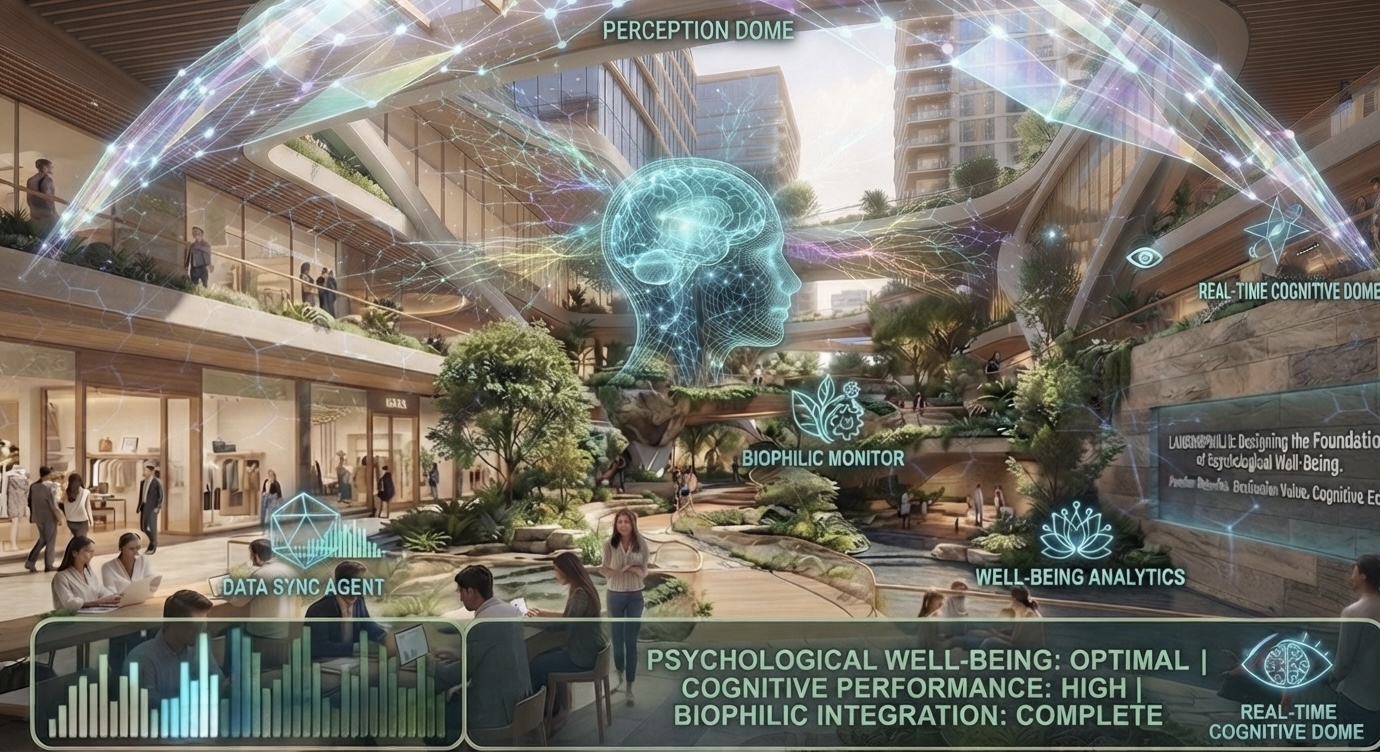
An analysis of a landskiphilic environment within commercial and residential assets through the lens of an AI agent valuing the positive impact on psychological well-being.

We often treat landscape design as an amenity—a checkbox to satisfy planning requirements or a cosmetic addition to boost curb appeal. But what if we shifted our perspective? What if landscape was treated as foundational psychological infrastructure for future real estate?

My recent research, “Landskiphilia—our affective preferences for landscape patterns,” explores a simple, powerful truth: humans are hardwired to respond to specific landscape patterns that once signaled safety, resources, and survival. These landscape patterns imprinted in our collective memory aren’t just aesthetic; they are deep-seated triggers for stress reduction, cognitive restoration, and psychological well-being.

Why does this matter for developers and owners? Whether you are building luxury residences or managing high-traffic retail malls, the built environment is a silent partner in your tenant’s experience. By intentionally applying the principles of Landskiphilia, we move beyond “beautiful greenery” to create spaces that actively support human health.

For clients, this creates three tangible competitive advantages:

  • Premium Retention & ROI: Spaces that align with our innate spatial instincts induce stronger brainwave patterns associated with stress reduction and positive emotions. Tenants, residents, and shoppers don’t just “like” these spaces—they are biologically drawn to them, increasing dwell time and long-term valuation.
  • Creating “Destination” Value: In a market saturated with “sustainable” developments, Landskiphilia offers a differentiator. It provides the science-backed “why” behind your design, signaling to investors and tenants that your developments are engineered to support psychological resilience, not just energy efficiency.

The “Cognitive” Edge: As we integrate AI and data to monitor urban performance, our landscapes should be part of that feedback loop. By designing environments that “speak” to the human psyche, we can build cities that learn from life and serve a dual purpose: they are self-sustaining ecosystems that also function as infrastructures for mental well-being.

True innovation in property development isn’t just about the digital intelligence of our buildings; it’s about reconnecting the technology we build with the ancient, inherited intelligence we have from nature.

I’m curious—how are you currently measuring the “human impact” of your developments? Is psychological well-being currently a core metric in your design brief? How do you see the future of real estate?

#RealEstateDevelopment #LandscapeArchitecture #Landskiphilia #BiophilicDesign #SustainableDevelopment #CognitiveCity #UrbanInnovation #AssetValue

Nature’s Feedback Loop: Imprinting Our Deepest Affinities

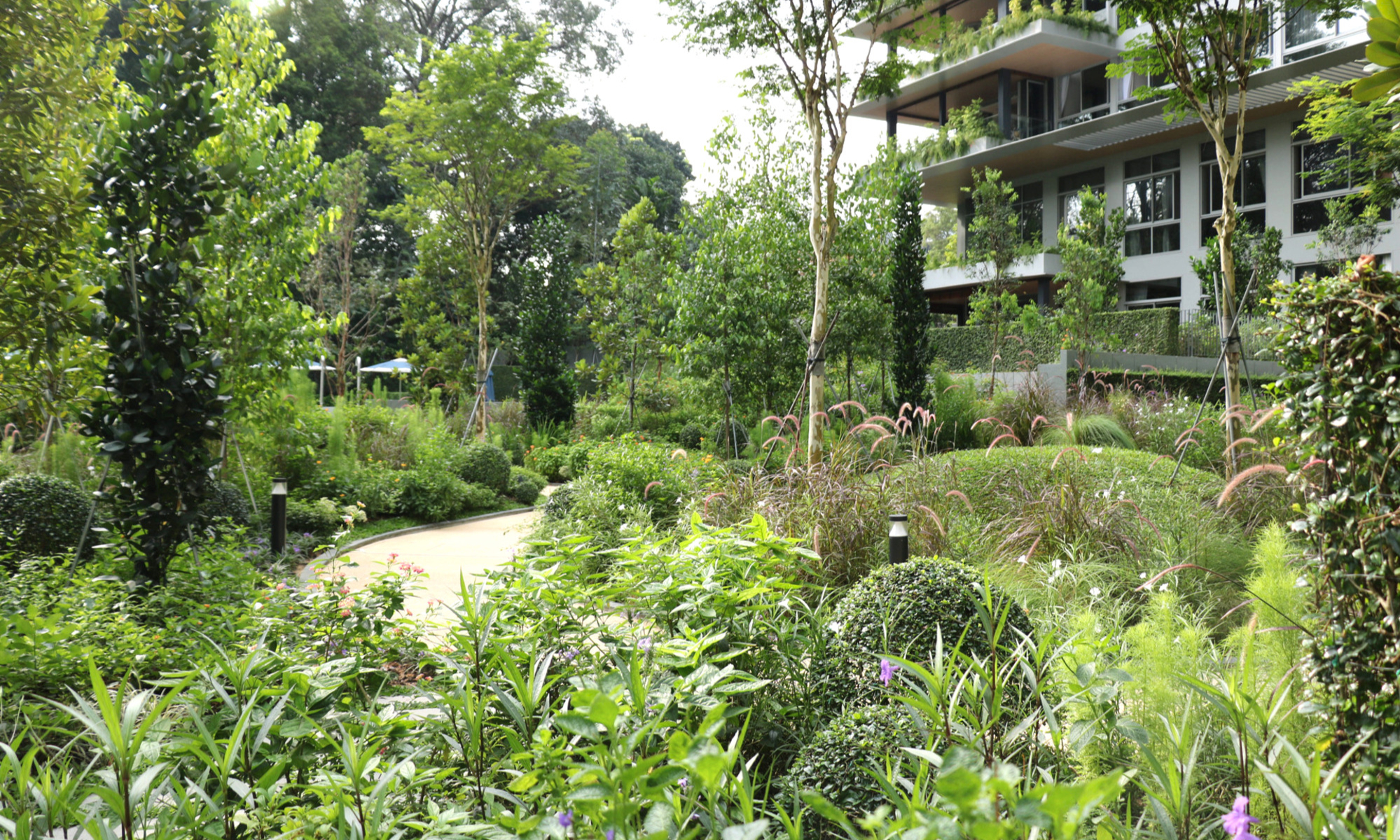
Saraca Stream—Asia's first ANFT certified Nature Immersion Trail.

Saraca Stream certified ANTF Nature Immersion Trail:

Last month, the Saraca Stream in the Singapore Botanic Gardens, designed by Christopher S. H. Long was certified as Asia’s first nature immersion trail by the ANTF (Association of Nature and Forest Therapy). This recognition underpins a fundamental truth: our connection to the natural world is not merely aesthetic—it is a deeply rooted physiological and psychological necessity. Under the lens of Landskiphilia (our innate human attraction to life-supporting landscapes that feel safe, nourishing, restorative, and connected to nature—refer to the paper here), we can understand this connection as a sophisticated feedback loop that has shaped our survival and continues to nourish our well-being today.

From Canopy Clusters to Forest Calm

Our attraction to certain landscape patterns may come from deep within our evolutionary past. Over time, humans learned to respond to environmental signs that helped us survive.

Think about the link between how our ancestors searched for food and why many of us still feel calm and restored in a forest today:

  • The Foraging Instinct: To survive in tree canopies and forests, our ancestors had to quickly read busy natural environments. They needed to spot useful signs, such as bright ripe fruit against dense green leaves. Over time, humans became good at noticing these patterns because they helped us find food, stay nourished, and survive.
  • The Forest Immersion: Today, the same way our brain responds to nature may explain why forests feel so restorative. Trees release phytoncides, which are natural oils from plants. These oils have been linked to benefits for immunity, blood pressure, sleep, and overall wellbeing. In other words, greenery is not only visually pleasing; it can also affect our body and mind in measurable ways.

This is nature’s feedback loop: the same affinity that once helped our ancestors find what they needed to live may also help us feel restored when we return to natural environments.

The Cognitive City—A Biomimicry of Nature’s Feedback Loop

A Cognitive City is a city that can sense, learn, and respond to the needs of people and the environment. It uses technology, data, and intelligence to improve how the city works over time.

In this sense, the Cognitive City is a form of biomimicry—design that learns from nature. It copies the way nature uses feedback, adaptation, and balance to support life.

In nature, living things constantly respond to their surroundings. Over many generations, this feedback helps species adapt and survive.

A Cognitive City works in a similar way, but through digital intelligence. It can use AI and real-time monitoring to understand how people use the city and how the environment is performing. It can then adjust, improve, and learn over time. For example, it may respond to heat, air quality, movement, comfort, biodiversity, or wellbeing. This is where landskiphilia becomes important: it refers to our natural love for life-supporting landscapes. By understanding this human attraction to healthy natural patterns, the Cognitive City can create urban environments that better support our physical, mental, and ecological wellbeing. As we move toward cities that can sense and respond to us, how can we make sure their digital feedback loops remain connected to the deep human need for nature, restoration, and life-supporting landscapes—i.e. deep-seated, landskiphilic needs encoded in our evolutionary history?

#landskiphilia #landskiphilicdesign #biophilia #biophilicdesign #regenerativedesign #cognitivecity #landscapearchiture #landscapepsychology

Landskiphilia—Our Emotional Connection with Landscape (a summary of “Landskiphilia—Our Affective Preferences for Landscape Patterns”

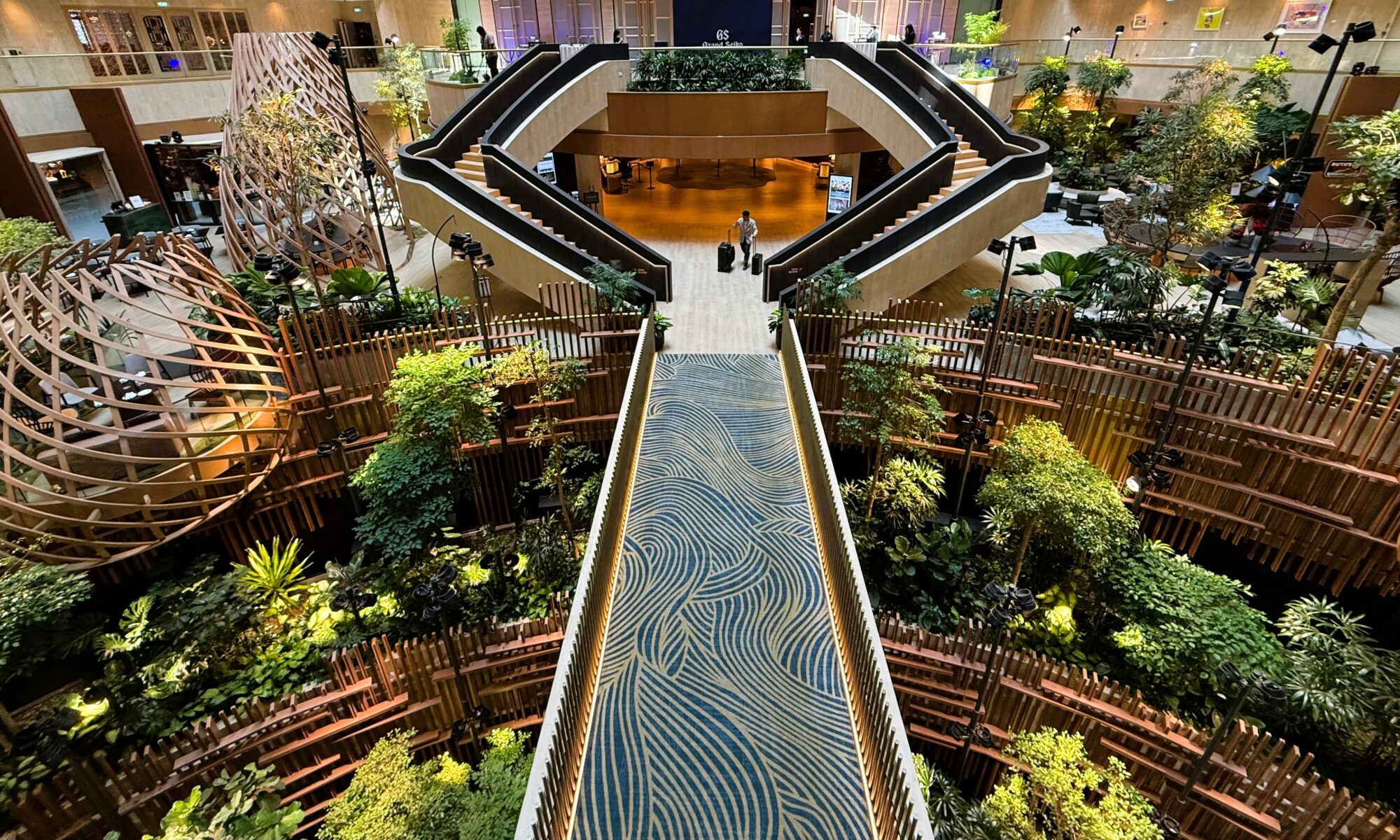
The Interior "Forest" Landscape of Park Royal Collection Marina Bay


“Landskiphilia—Our Affective Preferences for Landscape Patterns” proposes that humans possess innate, evolutionarily shaped emotional preferences for certain landscape forms, spatial structures, and environmental patterns. Building on Gibson’s theory of affordances, the paper argues that landscapes are not perceived merely as scenery, but as survival environments that suggest possibilities for movement, shelter, orientation, refuge, prospect, memory, and meaning.

The framework connects and extends existing theories such as the Savannah Hypothesis, Information Processing Theory, Prospect-Refuge Theory, Jellicoe’s evolutionary landscape layers, and Biophilia. It recovers biophilia’s meaning beyond a simple “love of nature” to include fear, vigilance, reverence, and survival-oriented attention toward natural environments.

Landskiphilia identifies how humans instinctively read spatial cues through forms, edges, textures, voids, and compositions. Neuroscience, including research on place and grid cells, supports the idea that spatial perception and environmental mapping are biologically embedded. It also distinguishes between extracted patterns, which support immediate survival behaviours, and abstracted patterns, which become embedded in long-term memory, culture, and collective landscape preference.

Landskiphilia suggests that some landscape compositions endure because they historically supported settlement, defence, agriculture, hunting, movement, and social learning. These patterns influence spatial memory, psychological wellbeing, affective response, and even conceptual thinking.

For practice, the framework offers a stronger foundation for evidence-based, regenerative landscape design. It encourages landscape architects to integrate evolutionary psychology, neuroscience, environmental psychology, and cultural memory into design thinking. Ultimately, Landskiphilia positions landscape as both ecological and psychological infrastructure—capable of regenerating the nature around us and the human instincts within us.

For a more detailed summary of the original paper and its relevance in regenerative design, please click here.

Landskiphilia is published—3 reasons why it is worth a read!

landskiphilic design expressed in a botanic anthropometry

I am pleased to announce the publication of the conceptual framework for landskiphilic design: “Landskiphilia — our affective preferences for landscape patterns” in the peer-reviewed journal Landscape Research.

Before we begin, a quick note of gratitude. This paper stands on the shoulders of giants. I owe a massive thank you to professors John Dixon Hunt, James Corner, and Anita Berrizbeitia. Their encouragement to pursue my interest planted the seeds for this work, and I am incredibly grateful for their enduring influence on my thinking. My initial idea for this paper was in Professor Hunt’s words “intriguing… but… does not prove anything;” and he exhorted me to “argue, don’t just assert!”

It has taken me over 26 years to heed his advice.

I am also immensely grateful for the patience of Dr Paul Brindley, who as academic editor, has invested so much not only to help me bring the work to a level ready for publishing, and also to help me polish it.

Below are three reasons why the paper is worth a read:

Reason One: It introduces a new conceptual framework for landscape theory

“Landskiphilia” is a novel, evolution-rooted explanation of why humans emotionally and neurologically respond to landscape. It looks at landscape theory from multiple perspectives; it is not merely a reinterpretation of existing work; and it gives readers a fresh and conceptually new framework.

Reason Two: It bridges neuroscience, evolutionary biology, and landscape architecture in a way few papers do

The paper offers a rare transdisciplinary synthesis integrating place/grid cells research, affordance theory, evolutionary behaviour, and cultural landscape. This makes it valuable to designers, planners, psychologists, and researchers seeking evidence-based foundations for spatial design.

Reason Three: It offers practical implications for building future liveable and regenerative cities

The paper doesn’t stay theoretical—it explains why understanding innate spatial preferences can strengthen urban design for mental health outcomes. It also explains how integrating biodiversity, climate mitigation, and other eco-system function goals with psychological goals can result in holistic regenerative design for both the nature around us and in us.

Please click here for the paper: https://doi.org/10.1080/01426397.2026.2682469
If you’d would prefer just a shorter read, please follow us, our next blog will present a summary of the paper.